AI has moved from experiment to infrastructure, no longer only an external tool but now, for many, a structural part of how design happens. In conversation with our collaborator Rob Boyett, we explore how thoughtful integration can preserve craft within established systems, and how his project Becoming an AI Designer maps this shift toward a more deliberate, open practice.
AI arrived in design practice without much fanfare at first, settling into workflows the way any new tool does when it stops being novel and starts becoming necessary. What looked, for a while, like something to try and post about and remain sceptical of has become part of the daily act of making — not through any single moment of adoption, but through a gradual accumulation of small decisions. Prompts replacing sketches, inputs turning into outputs — things that, at the time, felt so much like micro decisions that most of us may not have even noticed that the shift was already behind us.
The question now isn't whether designers will use these systems, but whether intention survives the process — whether there's still room for the deliberate gesture, the considered revision, within tools that increasingly anticipate what comes next. Unsurprisingly, there's still a tension here between craft and acceleration, between shaping something yourself and having it shaped for you, before you've fully understood what you wanted.
This mirrors, in some ways, how development itself matured over the past decade: from code as production to code as practice, as material, as something worth caring about beyond function. The conversations worth having aren't about novelty anymore; they're about integration, about how to embed these tools with precision and without losing the satisfaction of building something by hand, of knowing where each decision came from.
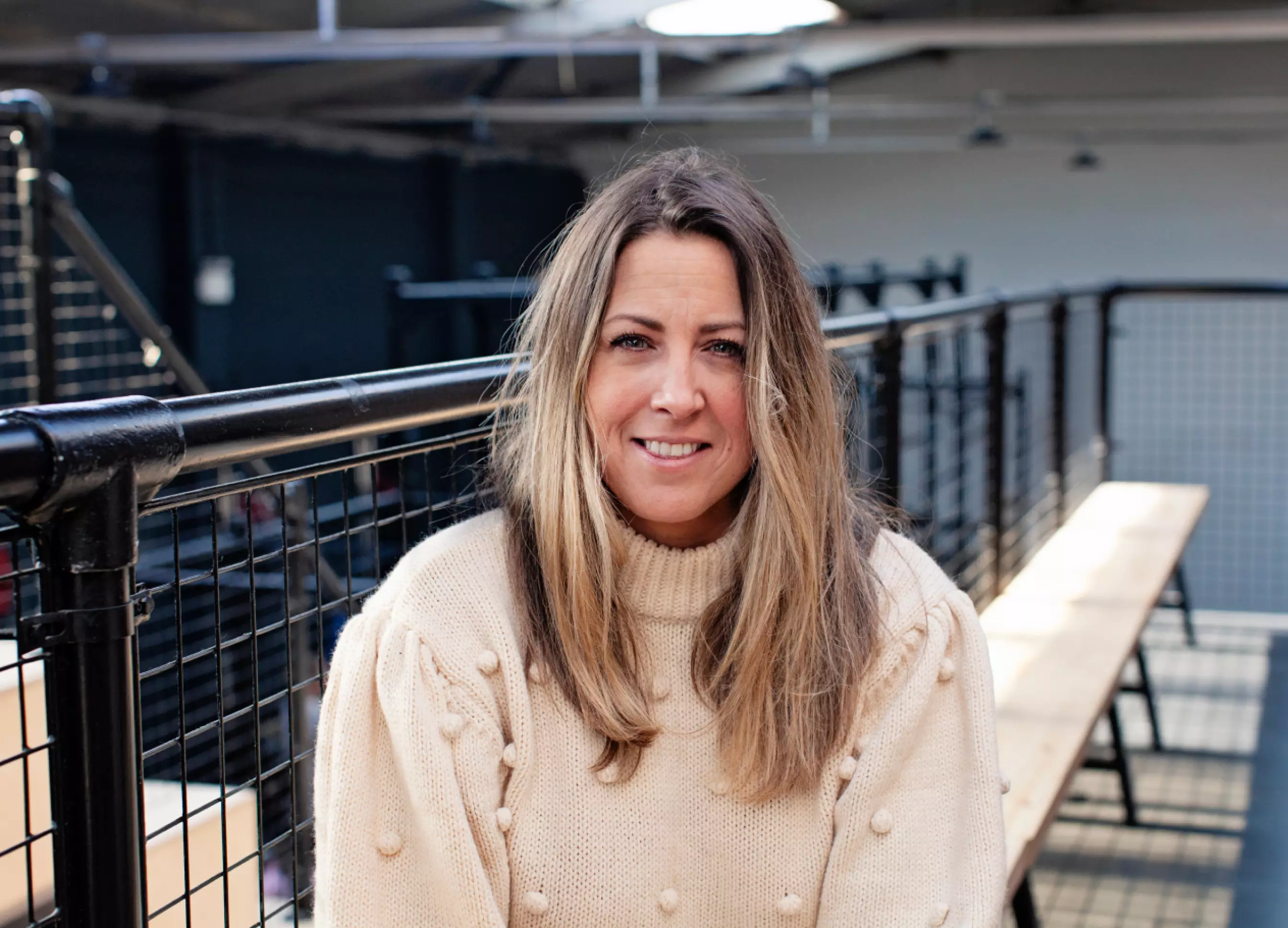
We spoke with long-time Engine collaborator Rob Boyett, a designer and developer whose open GitHub repository, Becoming an AI Designer, tracks this shift as it unfolds — not a manifesto or a branch of conclusions, but a working document left intentionally open to adapt over time.
The role of AI in design has shifted quickly — from peripheral experimentation to a central part of many workflows. In your view, how did we get here?
When I look back at the timeline, we can trace this shift to specific moments. Around April 2022, we had DALL-E 2 being released, followed by tools like GitHub Copilot, and then ChatGPT launching. But for quite a long time, there wasn't any standardised tooling for teams — it really depended on what kind of company you were in and how much interest you showed in these tools.
What's interesting is how this has evolved from individual curiosity into professional necessity. I know people interviewing for roles now who are asked to demonstrate their ability to integrate AI into their work, which shows how quickly expectations have shifted. The real acceleration has happened where some of the biggest successes are occurring in corporate design teams around design operations, particularly in rapid prototyping, where there's clear value being added.
I think we've reached a point where the bigger tool creators — Adobe, Figma, and similar — are starting to build steam and will eventually win this battle. They're gearing up to slowly purchase or squash the smaller players, and if they've already established themselves in large corporates, that's where things will consolidate. My prediction is that we're at the start of moving beyond the experimental phase into something more systematic and embedded.
The fundamental shift is that AI has moved from being a curiosity to being infrastructure. It's no longer about whether to engage with these tools, but how to integrate them thoughtfully into existing workflows whilst maintaining the human elements that matter.
From a practical perspective — which AI tools have been most valuable to your workflow recently?
I test many tools, and it's still quite messy — there are many workflows that require multiple different subscriptions. I'm running Claude, ChatGPT, and several others because there will be something specific that one does better, and I'll try to incorporate that.
For building prototypes, I'm using the Claude Code and API extensively, working through Cursor often. That combination has been particularly effective for rapid iteration on ideas.
I'm very interested in agentic frameworks at the moment. There's one called Letta that I'm exploring right now, which gets at this idea of AI as a persistent collaborative partner rather than just a session-based tool.
For image generation, I've been looking at a tool called Reeve, and another called Weavy.ai, which is designed explicitly for workflow building in a more accessible way than some of the more complex tools like ComfyUI.
What's interesting though, is that this is all still very much in flux. The tooling landscape is changing so rapidly that any specific recommendation feels provisional. What matters more than individual tools is developing fluency in how these different types of AI capabilities can be orchestrated together.
The real value isn't in any single tool — it's in building systems that combine multiple AI capabilities with human judgment and creativity. That's where the immediate future lies, not in replacing human work but in amplifying it through thoughtful integration of AI infrastructure and agency.
Rob's phrasing — AI as infrastructure — captures something crucial: a shift in depth rather than direction, where what matters now is not adoption but orchestration, the deliberate integration of tools that extend capability without eroding care.
Every generation of technology reshapes practice, but few have required this level of reflection on the act of making itself. If AI has become the scaffolding, then design becomes the way we inhabit it, the means through which we decide what remains human, what stays intentional, and what is still worth calling crafted.
Join us in Part II, where we continue our conversation with Rob to take a look at the human layer: the importance of preserving meaning inside accelerated systems. Where Rob describes the slow bits — those deliberate pauses that hold the craft together — we begin to see how precision meets patience and how design remains not just relevant but necessary within automation.